
Team Biographies

Randy Kimble
Project Scientist for Integration, Test, & Commissioning
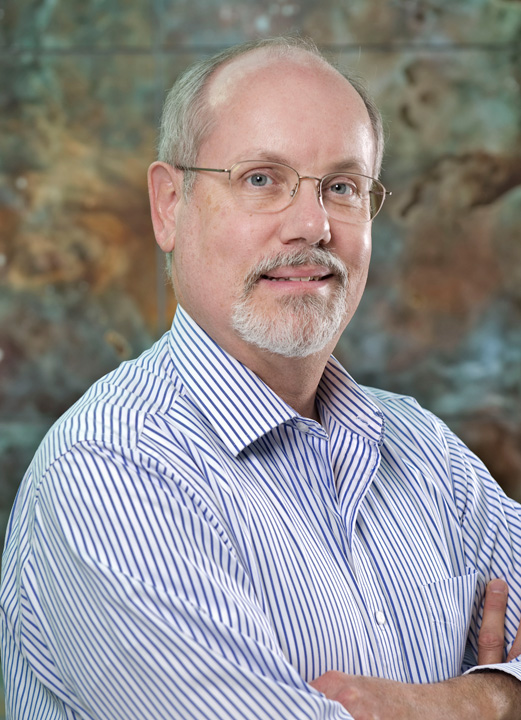
Randy Kimble currently serves as the Integration and Test Project Scientist for the James Webb Space Telescope. He is an astrophysicist in the Exoplanets and Stellar Astrophysics Laboratory of NASA's Goddard Space Flight Center in Greenbelt, MD, and has worked at Goddard since 1990.
Before joining the Webb project in the fall of 2009, Randy spent nearly 20 years as a member of several scientific teams developing new instruments for the Hubble Space Telescope: first, he served as Instrument Scientist and co-investigator during the development and flight operations of the Space Telescope Imaging Spectrograph (installed in 1997 in HST Servicing Mission 2), then as a co-investigator on the Advanced Camera for Surveys (installed in 2002 in HST Servicing Mission 3B), and finally as Instrument Scientist for the Wide Field Camera 3 (installed in 2009 in HST Servicing Mission 4). All three instruments have been (and continue to be) extremely productive scientifically; Wide Field Camera 3 in particular brought an advanced near-infrared capability to HST that is providing an exciting preview of some of the kinds of science that JWST will do spectacularly well. From 2002 to 2009, Randy also served as Project Scientist for the HST Development Project (the portion of the HST program responsible for overseeing the development of all new hardware for the telescope).
From 1983 to 1990, Randy was a member of the research staff of the Department of Physics and Astronomy at the Johns Hopkins University, serving as Deputy Project Scientist for the Hopkins Ultraviolet Telescope, which flew as an attached payload on the space shuttle Columbia in December, 1990.
Randy's scientific interests include the development of astronomical instrumentation, in particular detectors, and the study of stellar populations, young stars, and the interstellar medium.
Randy graduated from the Massachusetts Institute of Technology in 1974 and received a Masters degree (1976) and a PhD (1983) from the University of California, Berkeley, with all degrees in physics.
When not working, Randy enjoys reading, playing softball (over 25 years in the Goddard league), biking, and traveling with the family.


